Material Truth: Choosing Stone, Wood and Glass That Age Well
Honest materials get better with time. A guide to choosing finishes that develop character instead of wearing out.


Beauty that lasts
Some materials look their best on the day they are installed and slowly decline. Others start quietly and grow richer with every year of use. Stone softens at the edges, oak darkens to honey, brass takes on a warm patina. When we specify materials, we ask one question first: how will this look in twenty years?
Choosing materials that age well is not only an aesthetic decision. It reduces replacement, waste and maintenance, and it gives a building a sense of permanence that no trend can offer.
Honest materials do not hide wear. They record the life of the people who use them.
Stone
Natural stone is one of the most durable finishes available, but not every stone suits every room. Dense stones like granite and quartzite resist stains and scratches in kitchens. Softer limestones and marbles develop a gentle patina that many clients love in bathrooms and living areas.
- Choose a honed finish over polished for floors; it hides wear and is less slippery.
- Seal porous stones and reseal them every few years.
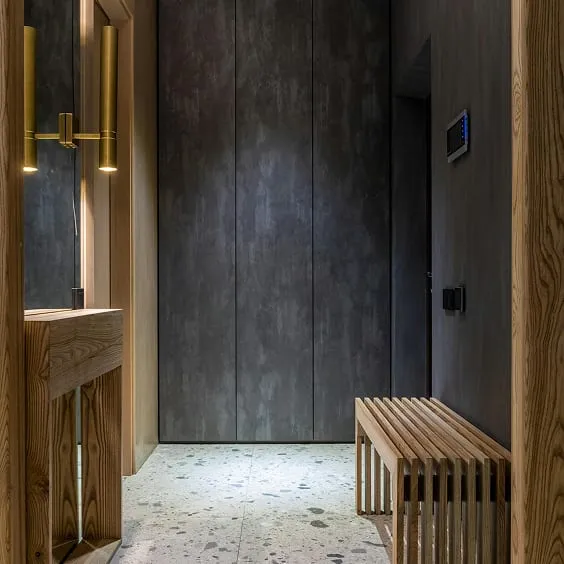
- Terrazzo, made from stone chips set in a binder, is hard-wearing and endlessly repairable.
Wood
Solid timber can be sanded and refinished many times, which makes it a lifelong material. Oak, walnut and ash are stable choices for floors and joinery. Oiled finishes are easy to touch up locally, while lacquered finishes protect more but show scratches clearly.
For exterior cladding, species such as larch and cedar weather naturally to a silver grey. Leaving them untreated is often the most sustainable and beautiful option.
Glass and metal
Glass does not age in the same way, but its frames do. Slim steel or aluminium profiles last for decades with little care. Timber frames bring warmth but need regular maintenance.
Metals like brass, bronze and copper are living finishes. Left unlacquered, they darken and shift in colour where hands touch them most, turning a door handle into a small record of daily life.
Combining materials
The most successful interiors use a limited palette. We usually work with three main materials and let them repeat throughout a project:
- A grounding material for floors, such as stone or terrazzo.
- A warm material at hand height, such as timber joinery.
- An accent that catches light, such as brass or ribbed glass.
A restrained palette lets each material speak clearly, and it ensures the whole space ages together as one.